
What is Gut Health and Microbiome?
Gut health refers to how well your digestive system works. It includes your stomach, intestines, and the bacteria living inside them. These bacteria are called the gut microbiome.
The microbiome has both good and bad bacteria. Good bacteria help digestion and protect your body. Bad bacteria can cause problems when they grow too much.
A healthy gut improves digestion, immunity, and overall wellness. When your gut is balanced, your body works better.
Core Functions of the Gut
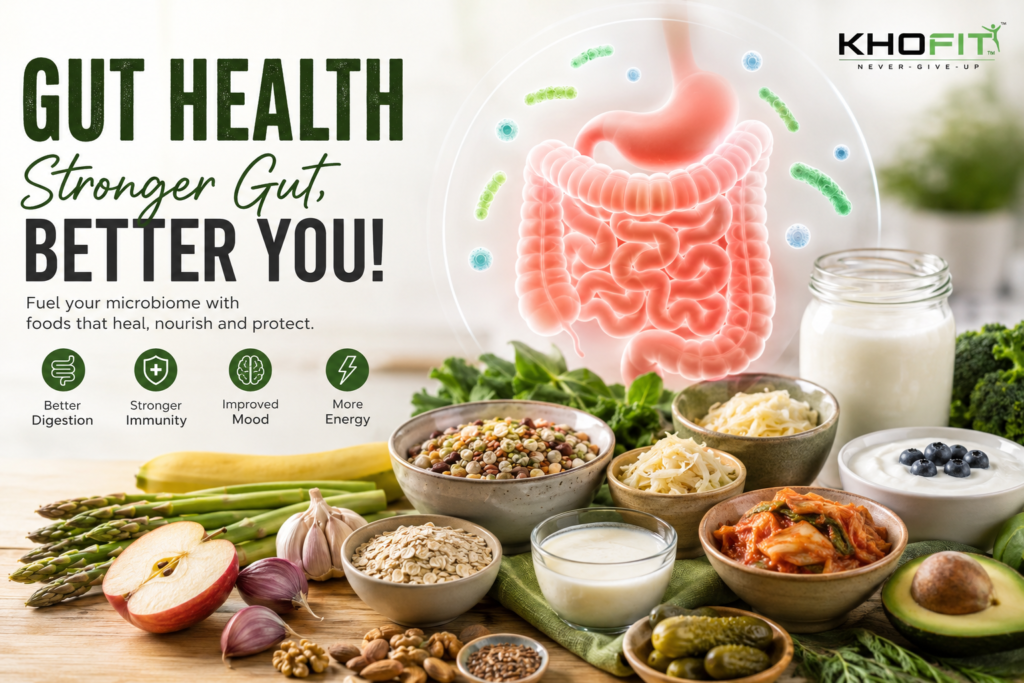
Nutrient Digestion and Absorption
The gut breaks down food into nutrients. These nutrients include proteins, fats, vitamins, and minerals. Your body absorbs them and uses them for energy and repair.
Immune System Support
Around 70% of your immune system is in your gut. Good bacteria help fight harmful germs. A strong gut means a stronger immune system.
Mental Health Regulation (Gut-Brain Link)
The gut and brain are connected. This is called the gut-brain axis. A healthy gut can improve mood and reduce stress.
Vitamin and Acid Production
Gut bacteria help produce vitamins like B12 and K. They also help maintain proper stomach acid levels for digestion.
Gut Barrier Protection
The gut lining acts as a barrier. It prevents harmful substances from entering the bloodstream. A healthy gut keeps this barrier strong.
Signs of an Unhealthy Gut
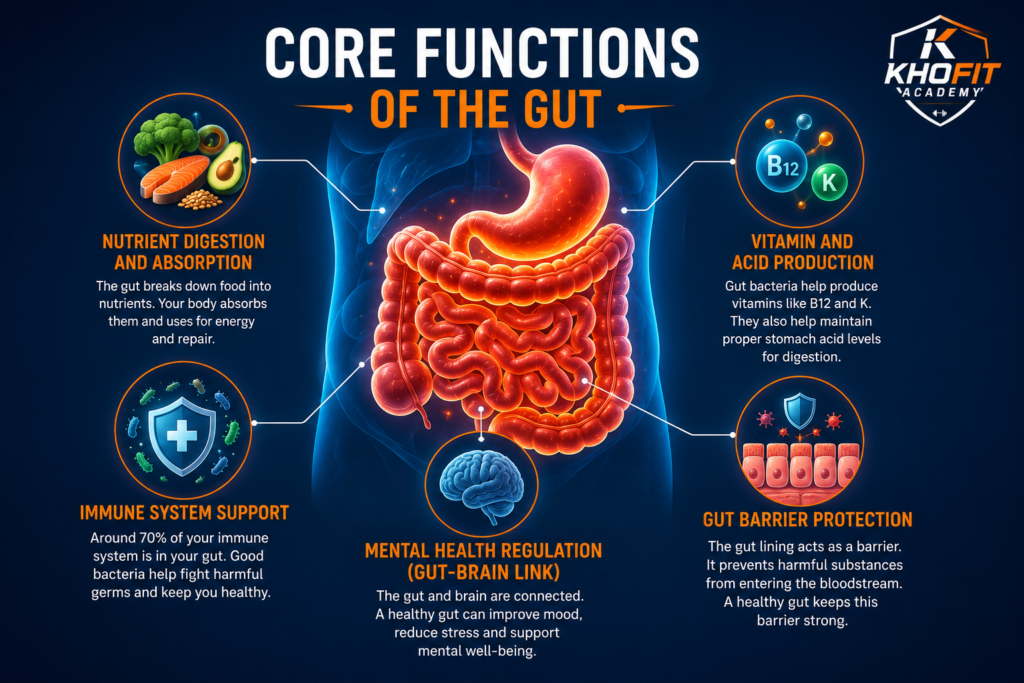
Upset Stomach and Bloating
Frequent gas, bloating, or stomach pain may show gut imbalance. Poor digestion causes discomfort after meals.
Sugar Cravings
Bad bacteria feed on sugar. This increases cravings and leads to poor eating habits.
Unintentional Weight Changes
Sudden weight gain or loss may be linked to gut health. Poor absorption or inflammation can affect metabolism.
Sleep Disturbances and Fatigue
An unhealthy gut can affect sleep quality. This leads to low energy and constant tiredness.
Skin Irritation
Skin problems like acne or psoriasis can be linked to gut issues. Inflammation in the gut can reflect on the skin.
Autoimmune Conditions
A weak gut can trigger immune responses. This may lead to autoimmune problems over time.
Best Foods for Gut Health
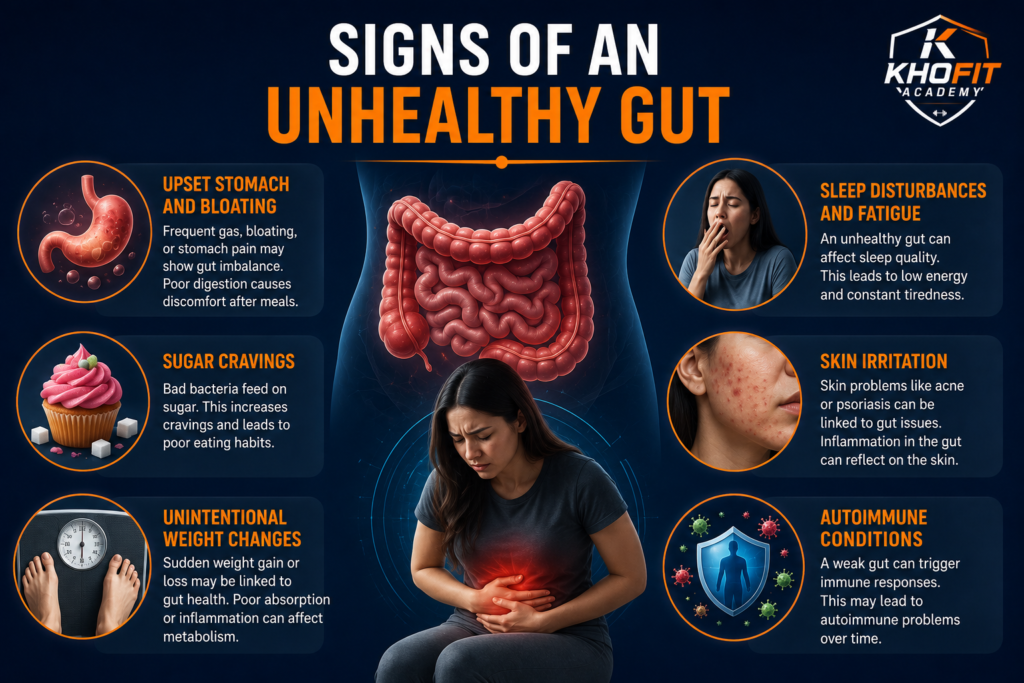
Probiotic Foods (Good Bacteria)
Probiotics add healthy bacteria to your gut.
- Yogurt and kefir improve digestion
- Kimchi and sauerkraut support gut balance
- Miso and kombucha boost healthy bacteria
- Pickles and buttermilk aid digestion
These foods help restore gut balance naturally.
Prebiotics and Fiber (Fuel for Good Bacteria)
Prebiotics feed the good bacteria.
- Whole grains and oats improve digestion
- Garlic, onions, and leeks support gut bacteria
- Lentils and beans increase fiber intake
- Bananas and apples support digestion
- Asparagus improves gut function
Fiber keeps your gut active and healthy.
Healthy Fats
Healthy fats reduce inflammation in the gut.
- Olive oil supports digestion
- Avocado provides healthy nutrients
- Ghee improves gut lining
- Fatty fish reduce inflammation
These fats support long-term gut health.
Fruits and Vegetables
Fruits and vegetables are rich in fiber and antioxidants.
- Leafy greens improve digestion
- Berries reduce inflammation
- Pears and figs support bowel movement
- Root vegetables improve gut health
They keep your gut clean and active.
Anti-Inflammatory Foods
These foods reduce gut irritation.
- Ginger improves digestion
- Turmeric reduces inflammation
- Cumin aids digestion
- Bone broth heals gut lining
- Almonds and walnuts support gut health
They protect and repair your gut.
Lifestyle Strategies for Better Gut Health
Manage Stress
High stress affects gut bacteria. Practice breathing and relaxation daily.
Prioritize Sleep
Sleep 7–8 hours every night. Good sleep helps gut repair and balance.
Exercise Regularly
Exercise improves digestion and gut movement. Even 15–20 minutes daily helps.
Stay Hydrated
Drink enough water throughout the day. Water supports digestion and nutrient absorption.
Eat Slowly
Chew food properly. Slow eating improves digestion and reduces bloating.
Use Antibiotics Carefully
Avoid unnecessary antibiotics. They kill both good and bad bacteria.
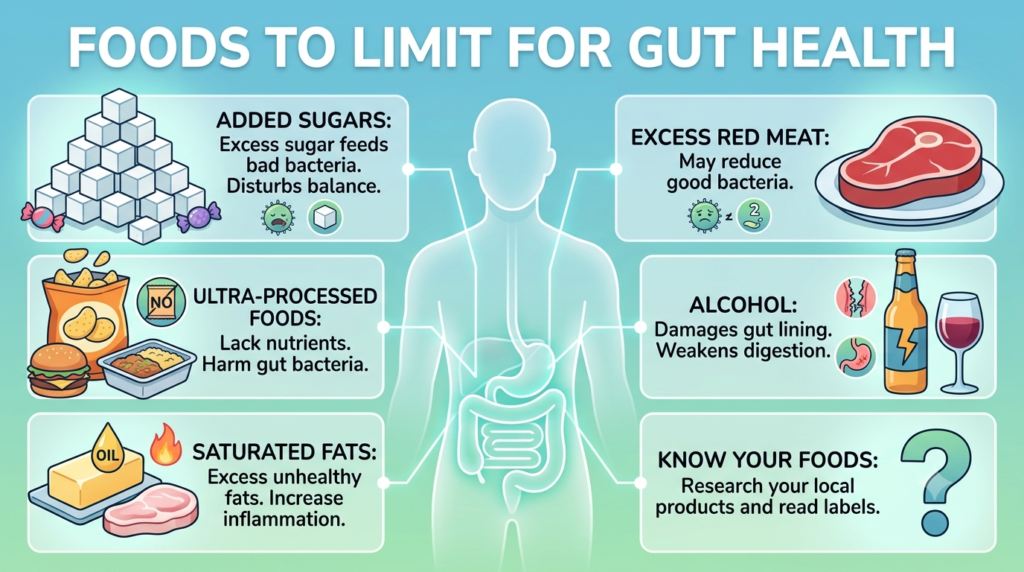
Foods to Limit for Gut Health
Added Sugars
Too much sugar feeds bad bacteria. It disturbs gut balance.
Ultra-Processed Foods
Processed foods lack nutrients. They harm gut bacteria.
Saturated Fats
Excess unhealthy fats increase inflammation. This affects digestion.
Excess Red Meat
Too much red meat may reduce good bacteria.
Alcohol
Alcohol damages the gut lining. It weakens digestion over time.
Simple Daily Gut Health Routine
Follow this daily routine for better gut health:
- Start your day with water
- Include probiotic foods daily
- Add fiber in every meal
- Exercise for 15–20 minutes
- Sleep at least 7–8 hours
Small habits create big results.
Conclusion
Gut health is the foundation of overall health. A healthy gut improves digestion, immunity, and energy levels.
Simple food choices and daily habits can improve your gut. You do not need complicated plans.
Stay consistent. Small changes every day will give long-term results.
FAQs
How long does it take to improve gut health?
It can take a few days to a few weeks. Consistency in diet and lifestyle is important.
What is the best probiotic food?
Yogurt and buttermilk are simple and effective probiotic foods.
Can gut health affect weight loss?
Yes. A healthy gut improves metabolism and helps in weight management.
Are supplements necessary for gut health?
Not always. Natural foods are usually enough for most people.
How to know if your gut is healthy?
Good digestion, stable energy, and no bloating are signs of a healthy gut.
Start your fitness journey with KHOFIT Academy.
Get your personalized nutrition and training plan today.