
Yoga Poses for Sciatica Relief
Supine & Floor Poses (Beginner Friendly)
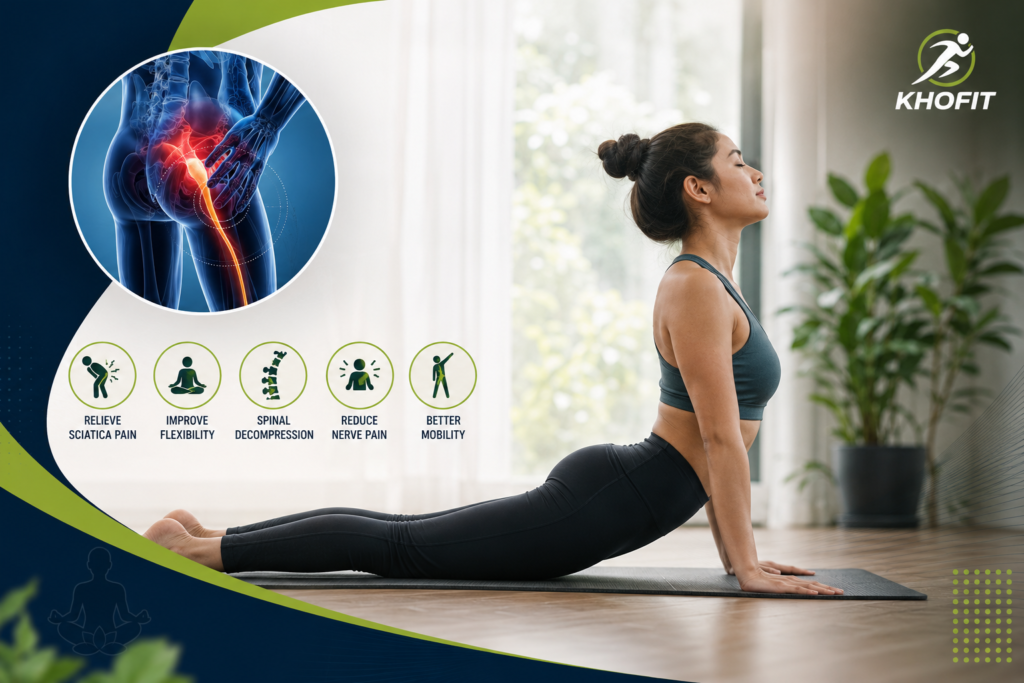
These poses are done lying down. They are safe and easy for beginners.
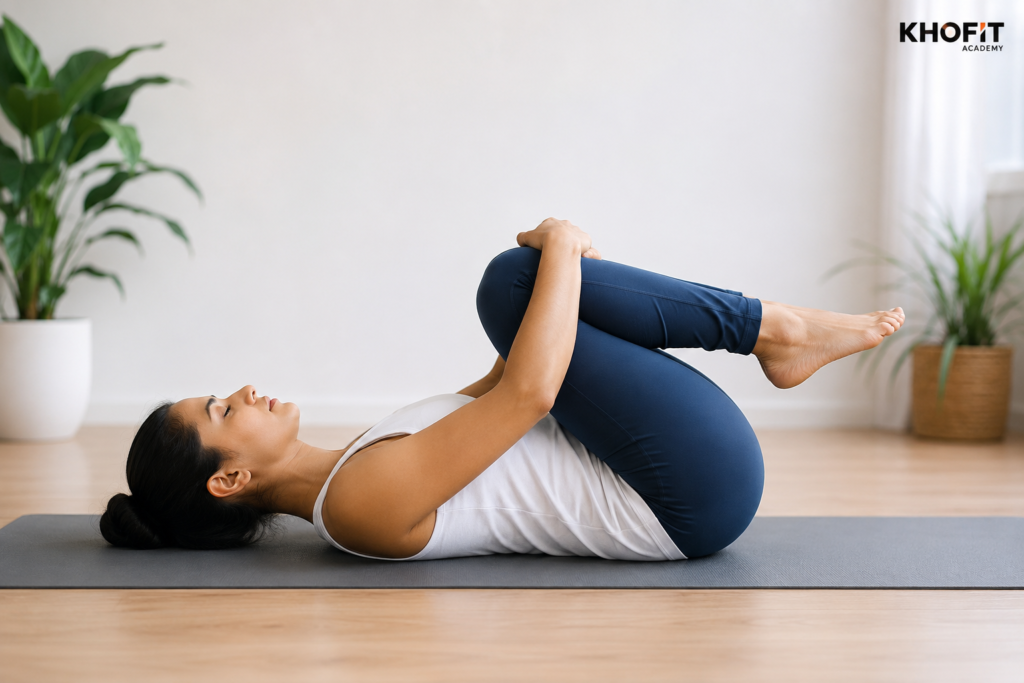
Pawanmuktasana (Knees-to-Chest Pose)
This pose gently stretches the lower back and relieves pressure on the spine.
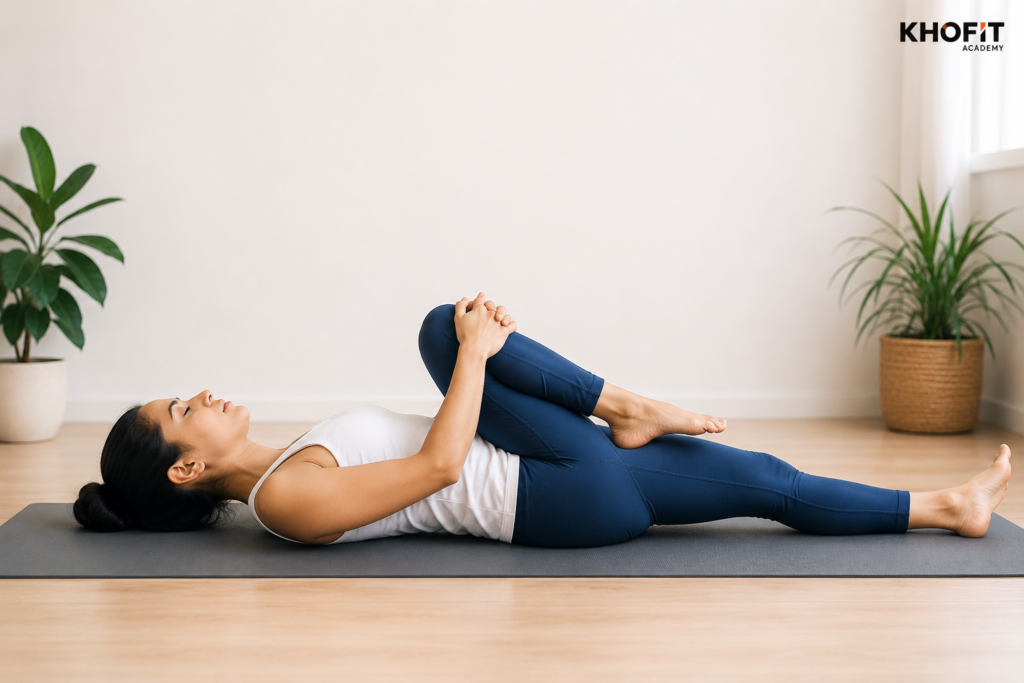
Supta Kapotasana (Reclined Pigeon Pose)
It helps open the hips and reduce tension around the sciatic nerve.
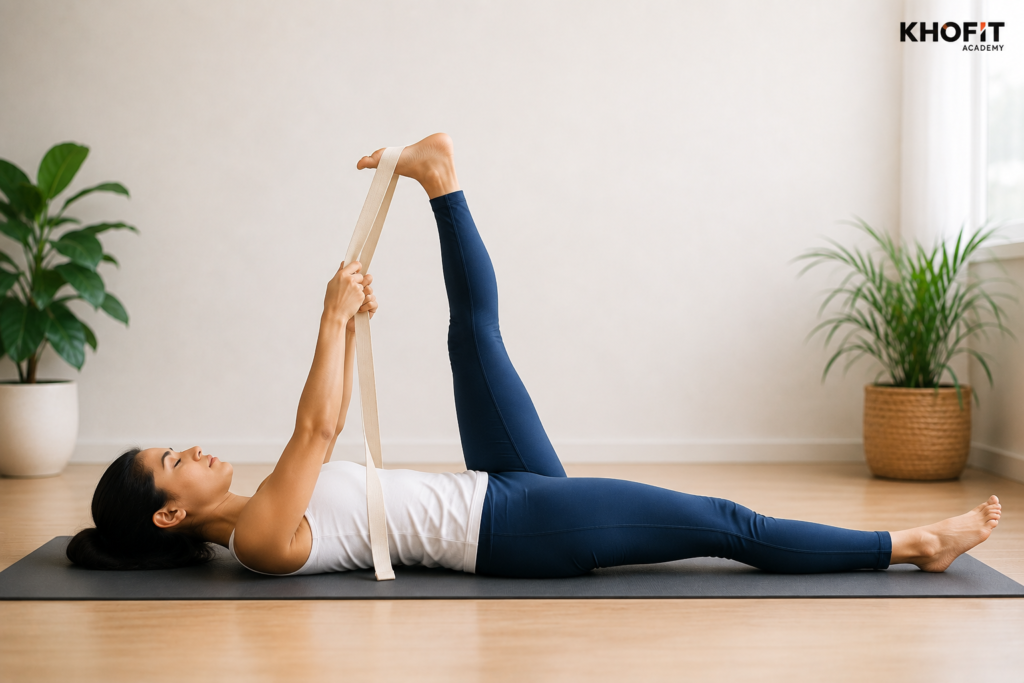
Supta Padangusthasana (Reclining Leg Stretch)
This improves hamstring flexibility and reduces nerve pull.
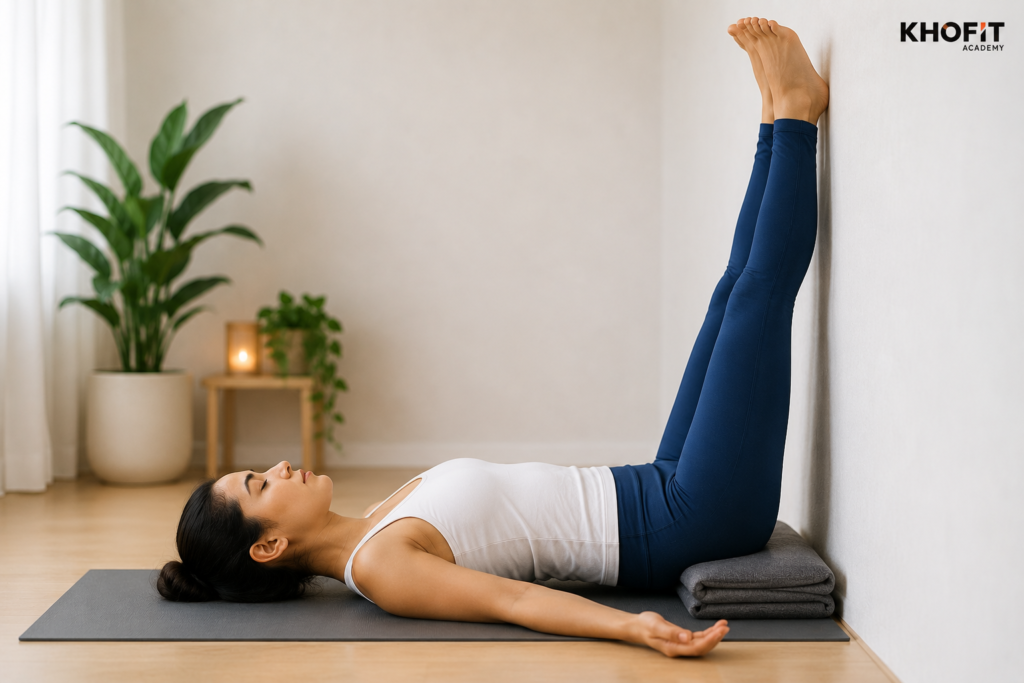
Viparita Karani (Legs-Up-the-Wall Pose)
It improves blood circulation and relaxes the lower body.
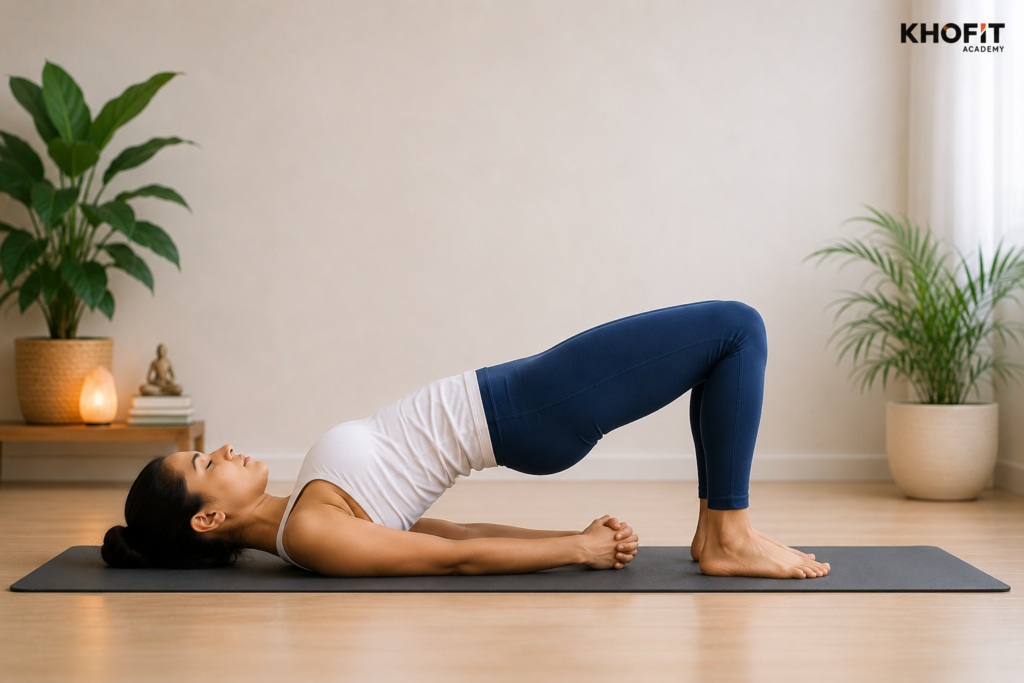
Setu Bandhasana (Bridge Pose)
Strengthens the lower back and glutes while improving spinal support.
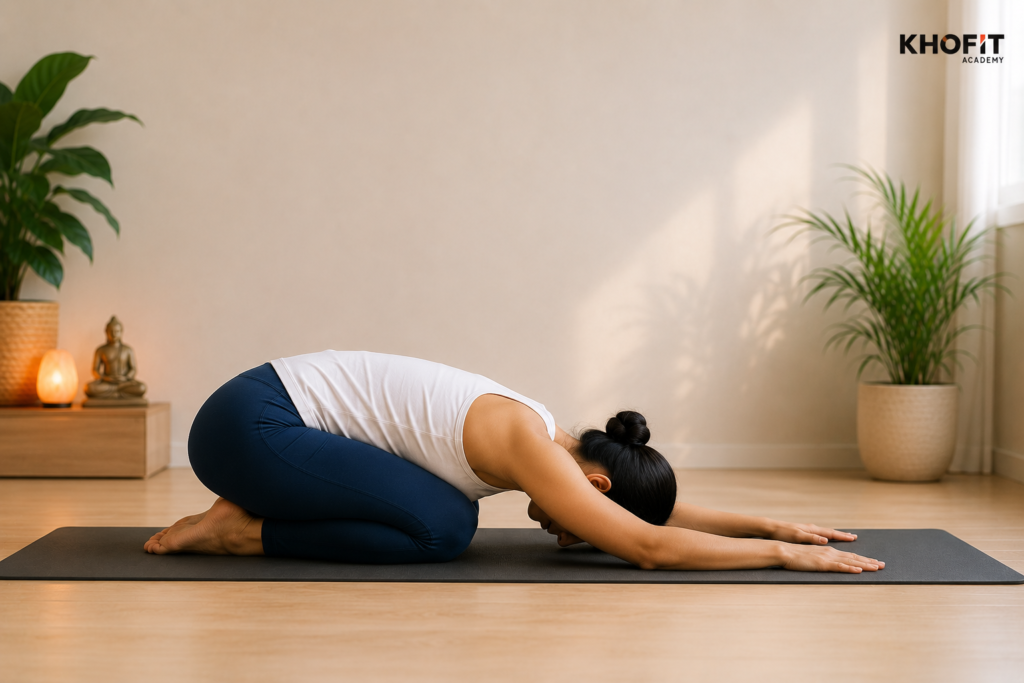
Shishuasana (Child’s Pose)
A relaxing pose that gently stretches the spine.
Cat–Cow Stretch
Improves spinal mobility and reduces stiffness.
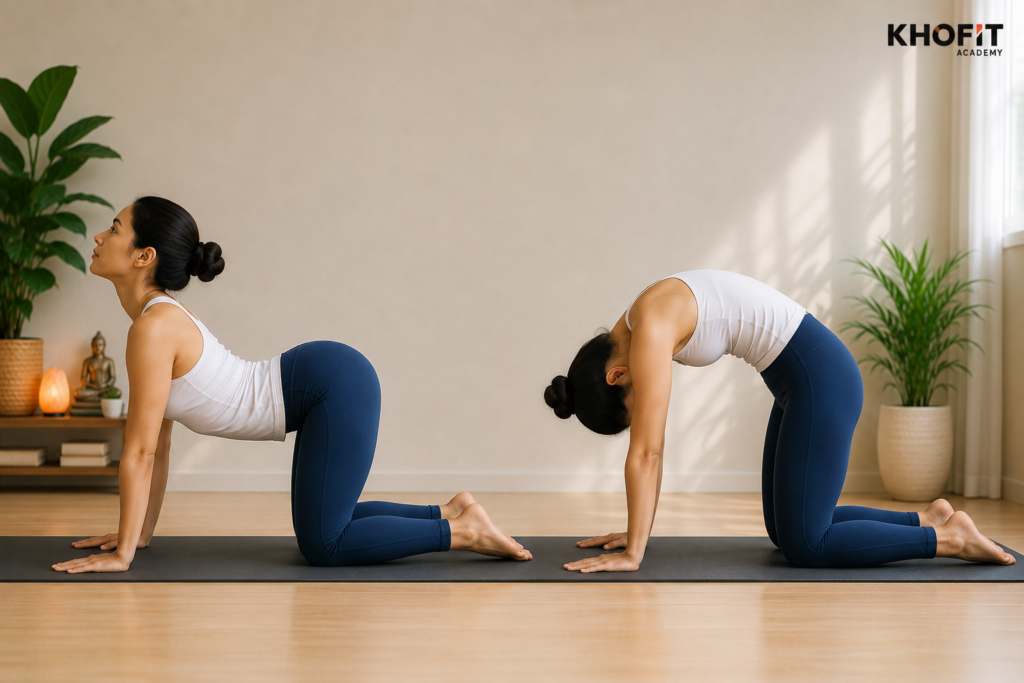
These poses are best for pain relief and early-stage recovery.
Seated Poses (Mobility Improvement)
These poses help improve flexibility and hip movement.
Ardha Matsyendrasana (Half Spinal Twist)
Improves spinal flexibility but should be done gently.
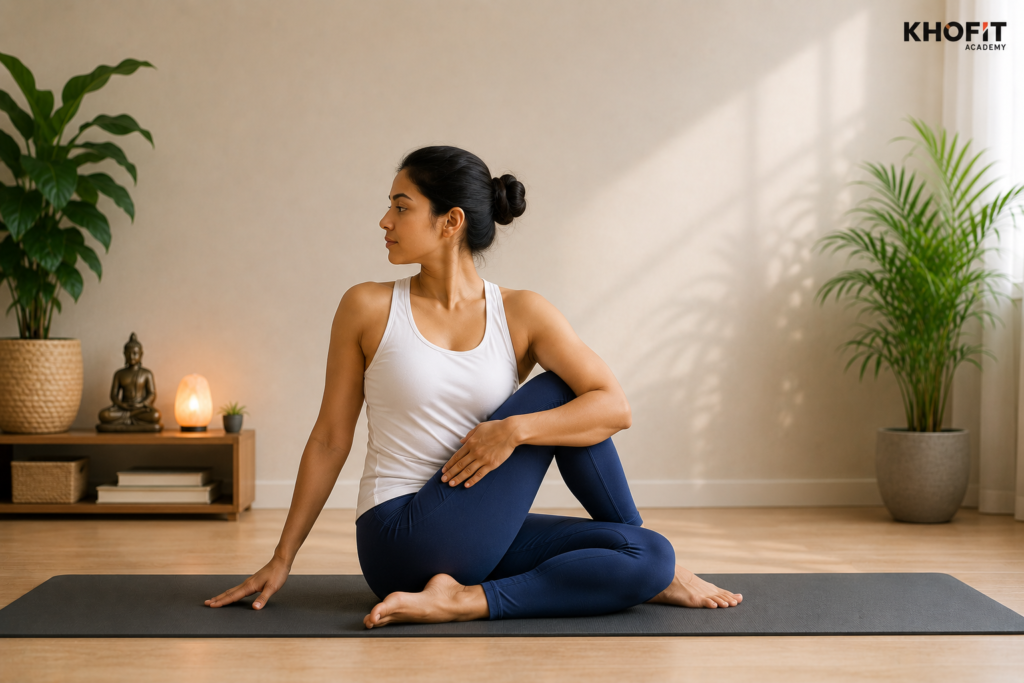
Gomukhasana (Cow Face Pose)
Helps stretch hips and reduce tightness.

Double Pigeon Pose
Targets deep hip muscles and releases tension.
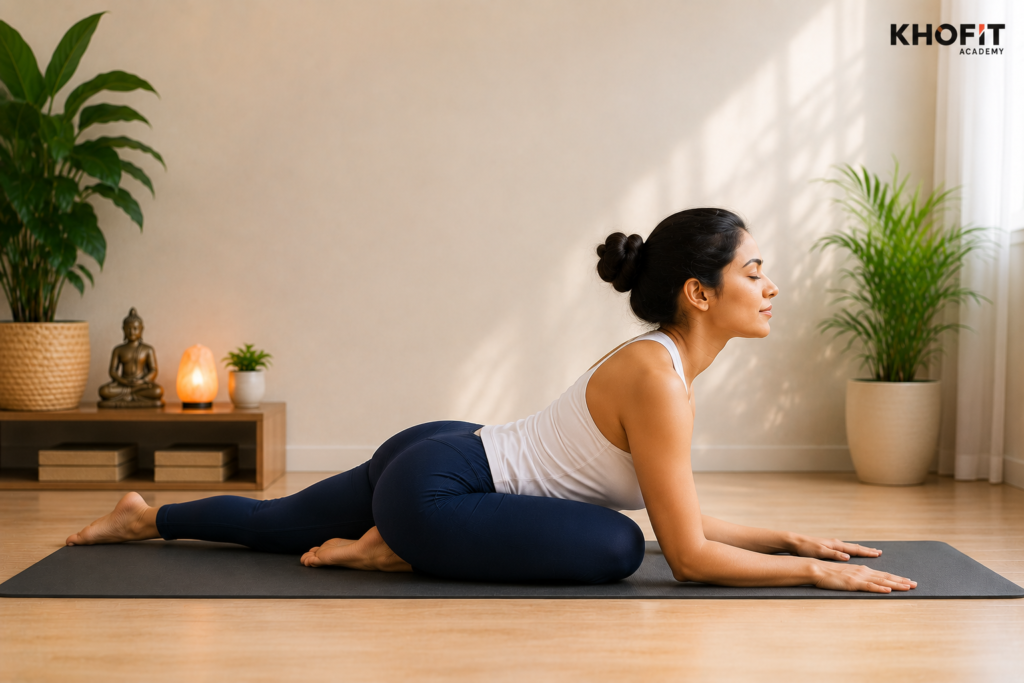
Chair Malasana (Supported Squat)
Improves hip opening with support.
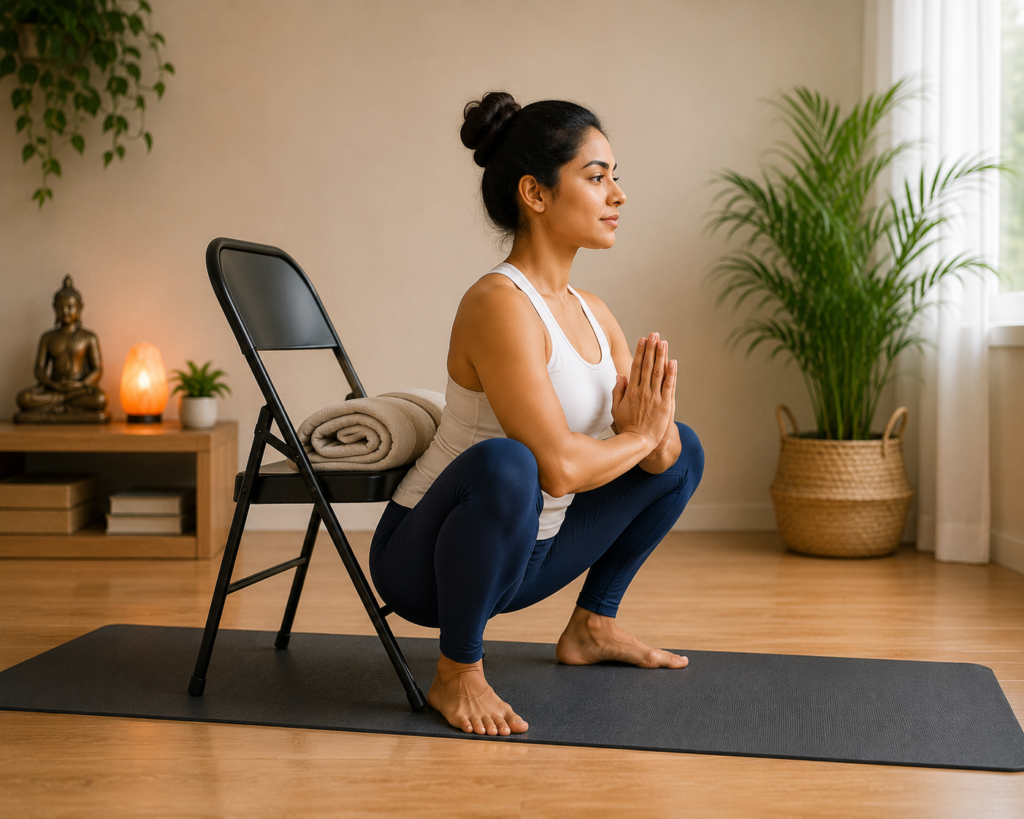
Sitting Pigeon Pose
A simple version to reduce hip stiffness.
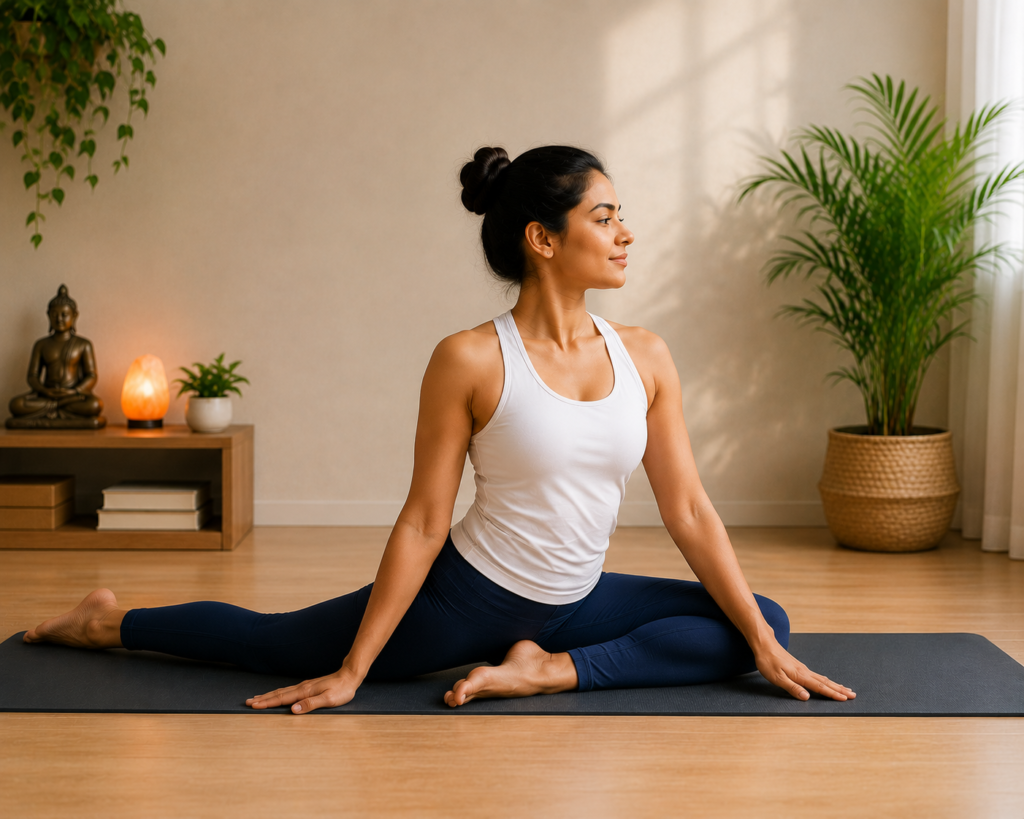
These poses reduce pressure on the sciatic nerve by improving hip mobility.
Active & Standing Poses (Strength + Flexibility)
These poses are for the recovery stage when pain is reduced.
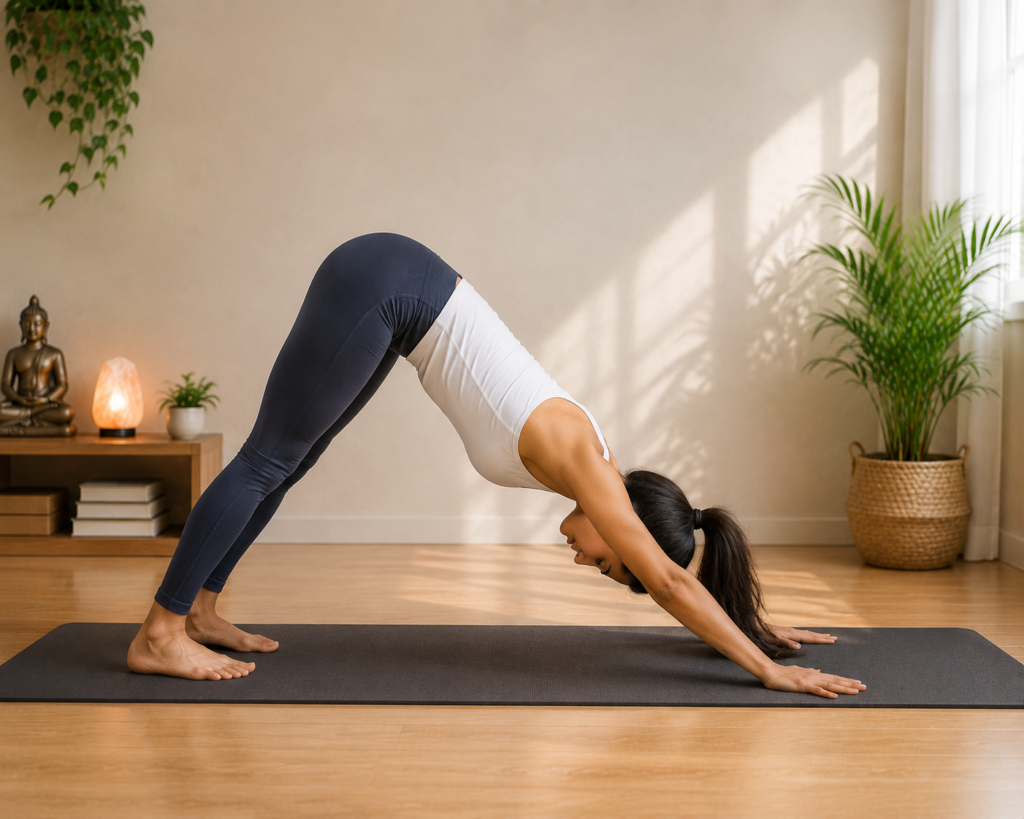
Adho Mukha Svanasana (Downward Dog)
Stretches the entire back and improves flexibility.
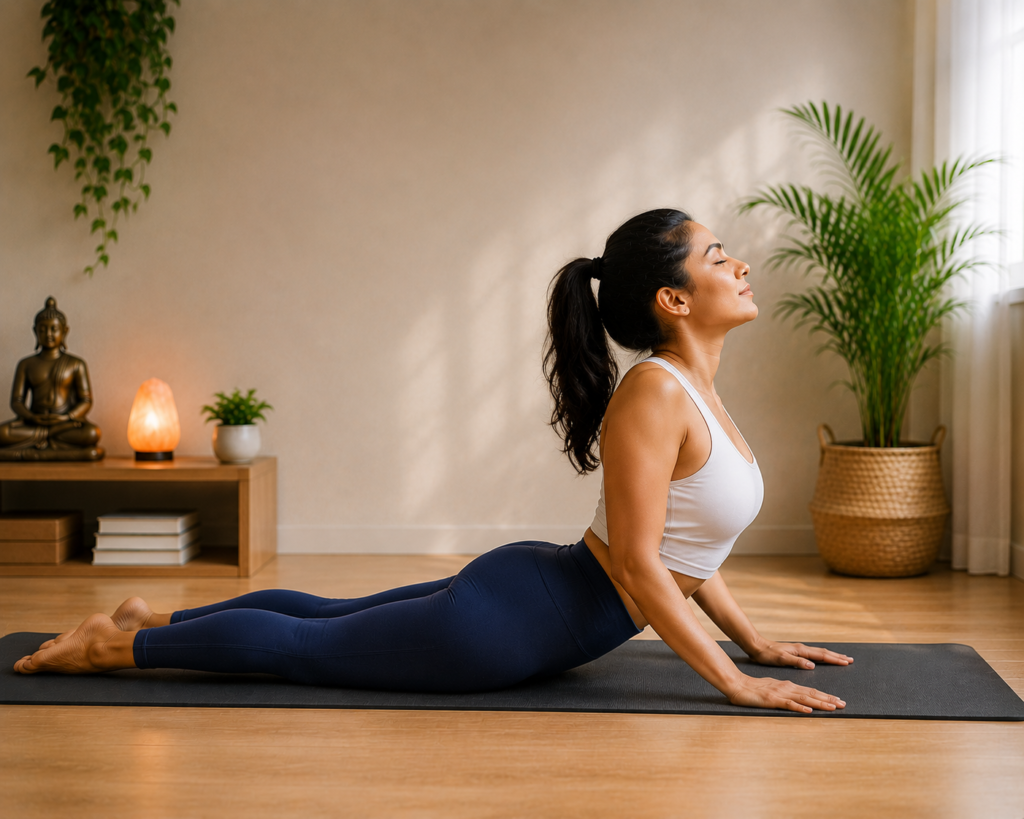
Bhujangasana (Cobra Pose)
Strengthens the lower back and opens the chest.
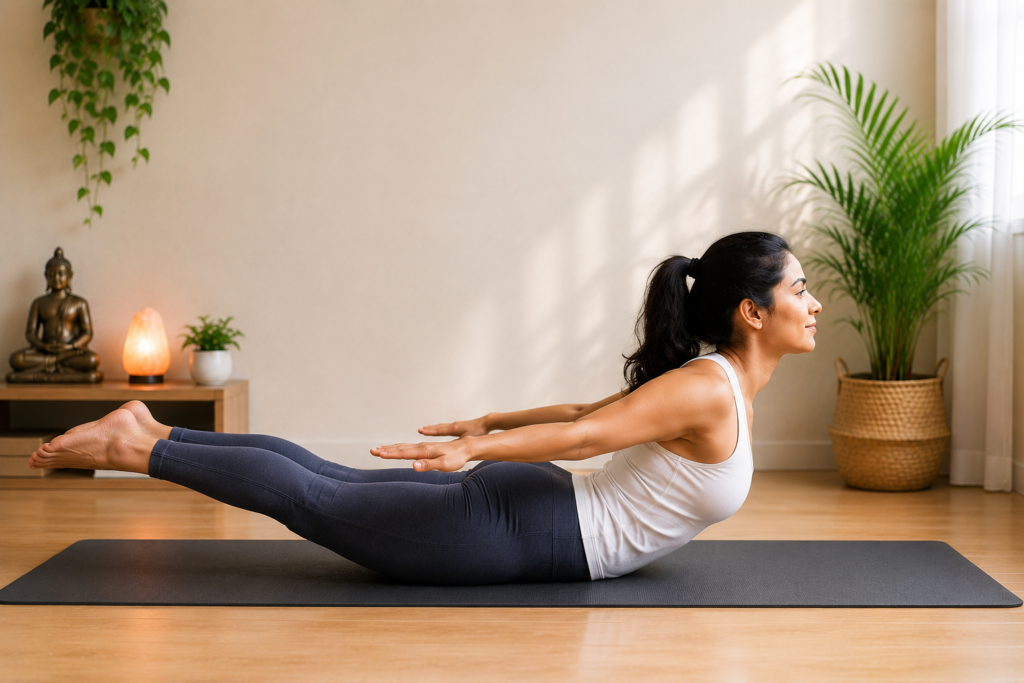
Salabhasana (Locust Pose)
Builds strength in the lower back muscles.
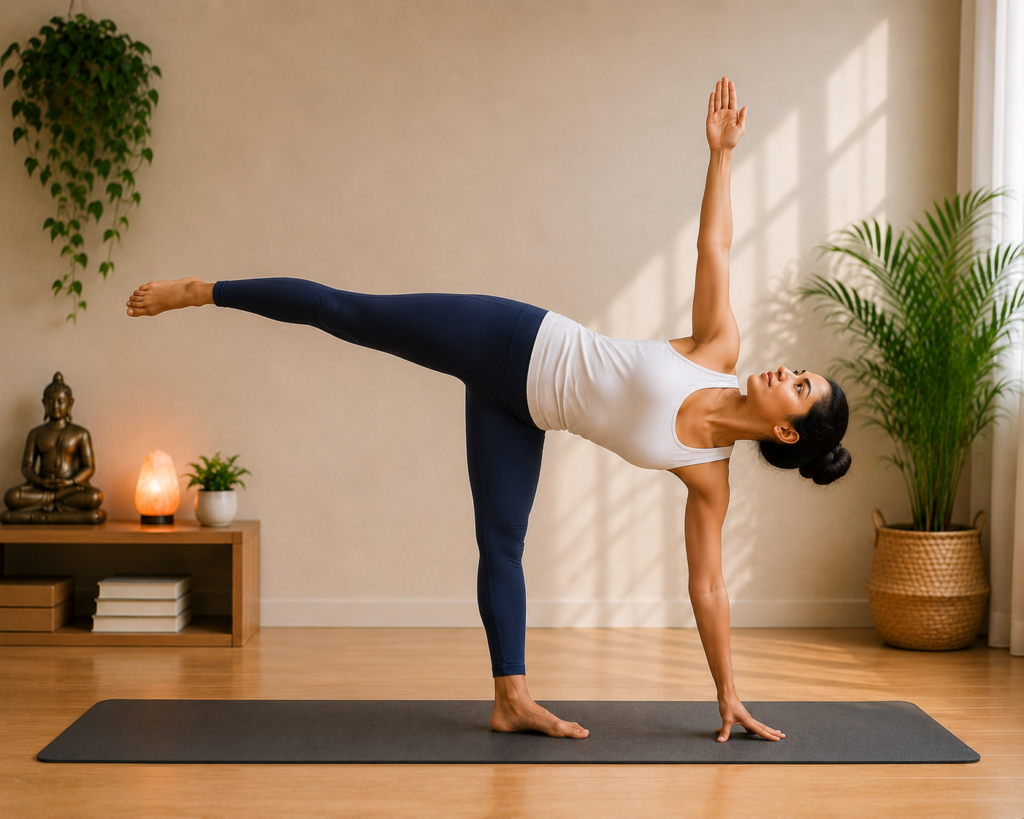
Ardha Chandrasana (Half Moon Pose)
Improves balance and strengthens the body.
Standing Hamstring Stretch
Reduces tightness in the legs.
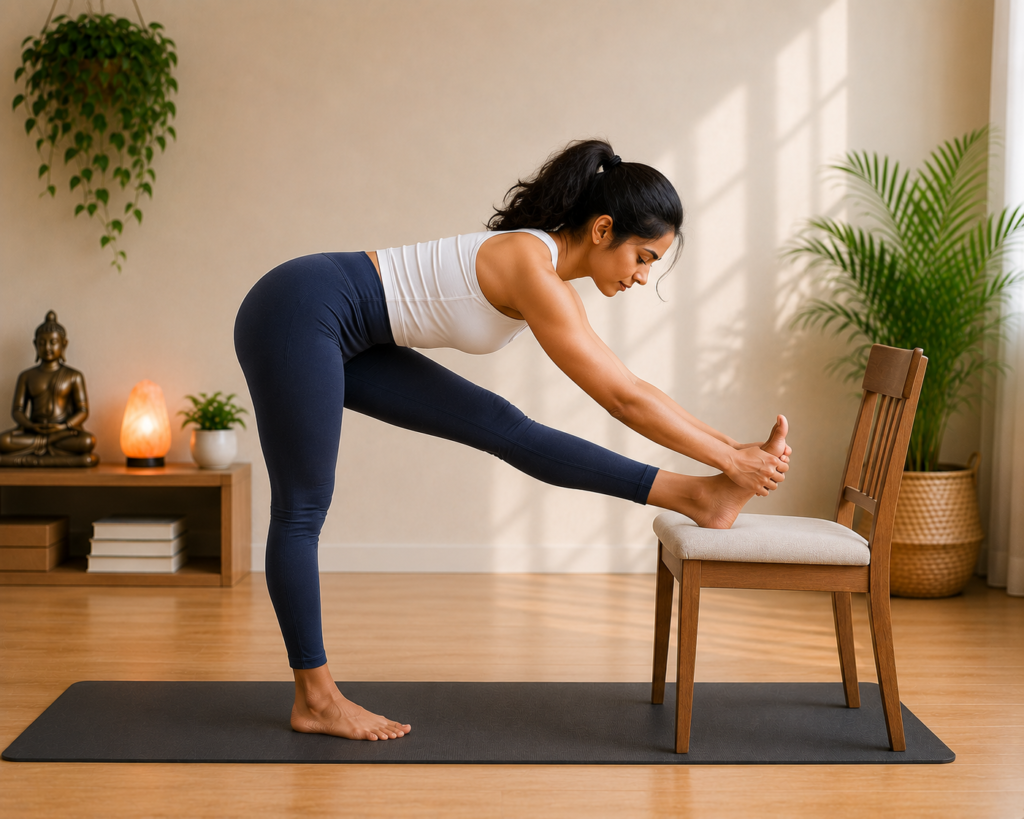
These poses help build strength and prevent future pain.
Poses to Avoid (Injury Prevention)
Some yoga poses can make sciatica worse if done incorrectly.
Avoid:
- Deep forward bends with rounded back
- Strong or deep twisting movements
- Shoulder stand (Sarvangasana)
- Intense straight-leg stretches
These movements can increase nerve pressure and pain.
Safety & Methodology (How to Practice)
Essential Props
Using support tools makes yoga safer and easier.
- Yoga straps or belts
- Bolsters or pillows
- Yoga blocks
- Blanket rolls
- Chair or wall support
These reduce strain and help maintain proper alignment.
Core Principles
Follow these simple rules while practicing:
- Breathe slowly and deeply
- Move gently between poses
- Keep your spine aligned
- Avoid forcing your body
- Focus on comfort, not intensity
Regular practice is more important than doing difficult poses.
Additional Relief Tips (Holistic Approach)
Yoga works best when combined with simple daily habits.
You can also try:
- Hot and cold therapy
- Sitting with correct posture
- Light walking or low-impact exercise
- Massage therapy
- Acupuncture (if needed)
If pain is severe or long-lasting, consult a medical professional.
Sciatica is a type of pain that starts in the lower back and travels down the leg. It can make simple movements like sitting, walking, or bending very uncomfortable. Many people face this problem due to long sitting hours, poor posture, or lack of movement.
Most people look for natural ways to reduce this pain without depending on medicines. Yoga is one of the safest and most effective methods.
In this guide, you will learn simple yoga poses, safety tips, and easy methods to reduce sciatica pain and improve movement.
Understanding Sciatica (Core Concept)
Sciatica is not a disease. It is a condition caused by pressure or irritation on the sciatic nerve. This is the longest nerve in the body, running from the lower back to the feet.
When this nerve gets compressed, it creates pain, numbness, or weakness in the leg. This pain usually affects one side of the body.
Yoga helps by gently stretching muscles, improving blood flow, and reducing pressure on the nerve.
Symptoms of Sciatica (User Awareness)
Sciatica symptoms can vary from person to person. Some may feel mild discomfort, while others may experience strong pain.
Common symptoms include:
- Sharp or shooting pain in the lower back or leg
- Tingling or numbness in the leg or foot
- Weakness in one leg
- Burning sensation along the nerve
- Pain that increases while sitting
If these symptoms continue for a long time, it is important to take action early.
Primary Causes (Problem Identification)
Sciatica happens when the sciatic nerve gets compressed or irritated. This can happen due to several reasons.
Common causes include:
- Herniated or slipped disc
- Piriformis syndrome (tight hip muscle pressing the nerve)
- Spinal stenosis (narrowing of spine)
- Poor posture and long sitting hours
- Injury or sudden movement
- Pregnancy-related pressure
Understanding the cause helps you choose the right exercises and avoid further damage.
Why Yoga Works for Sciatica (Solution Logic)
Yoga works on the root cause of sciatica pain instead of just reducing symptoms.
It helps in:
- Improving blood circulation
- Increasing muscle flexibility
- Reducing nerve compression
- Correcting posture
- Relaxing tight muscles
When practiced regularly, yoga reduces pain naturally and improves overall movement.
Conclusion
Sciatica pain can be managed naturally with the right approach. Yoga is a safe and effective way to reduce pain and improve movement.
Start with simple poses, move slowly, and stay consistent. Listen to your body and avoid anything that causes pain.
Combine yoga, good posture, and healthy habits for long-term relief and recovery.