
Sleep is one of the most important factors for a healthy pregnancy. The way you sleep directly affects your comfort, blood circulation, and your baby’s development. As your body changes across each trimester, your sleeping position must also adapt to support both you and your baby.
In this guide, you’ll learn the safest sleeping positions during pregnancy, trimester wise recommendations, and practical tips to improve sleep quality.
Why Sleeping Position Matters During Pregnancy
During pregnancy, your body undergoes major physical changes. The growing uterus puts pressure on your internal organs and blood vessels, which can affect blood flow and oxygen supply.
Poor sleeping posture can lead to:
- Back and hip pain
- Dizziness and discomfort
- Reduced circulation to the baby
The goal is simple: maximize comfort while ensuring proper blood flow and healthy fetal development.
Trimester Specific Sleeping Advice
First Trimester (Weeks 1–12)
In the early stage of pregnancy, your body is still adjusting, and the uterus remains protected within the pelvis.
- Almost all sleeping positions are safe
- You can sleep on your back, side, or stomach
- Focus on building healthy sleep habits early
At this stage, comfort matters more than position. Choose what feels natural and relaxing.
Second Trimester (Weeks 13–26)
As your baby grows, your sleeping position becomes more important.
- Side sleeping (SOS – Sleep On Side) is recommended
- Avoid sleeping on your back after 20 weeks
- Stomach sleeping becomes uncomfortable
- Start using pillows for support
Sleeping on your back can press on major blood vessels, reducing circulation. Switching to side sleeping improves blood flow and reduces strain on your body.
Third Trimester (Weeks 27–Delivery)
This is the most critical phase for sleep positioning.
- Side sleeping becomes essential
- The left side is the best position
- Elevate your upper body to reduce heartburn
- Use pillows for full-body support
Left-side sleeping improves circulation to the placenta and helps deliver nutrients efficiently to your baby.
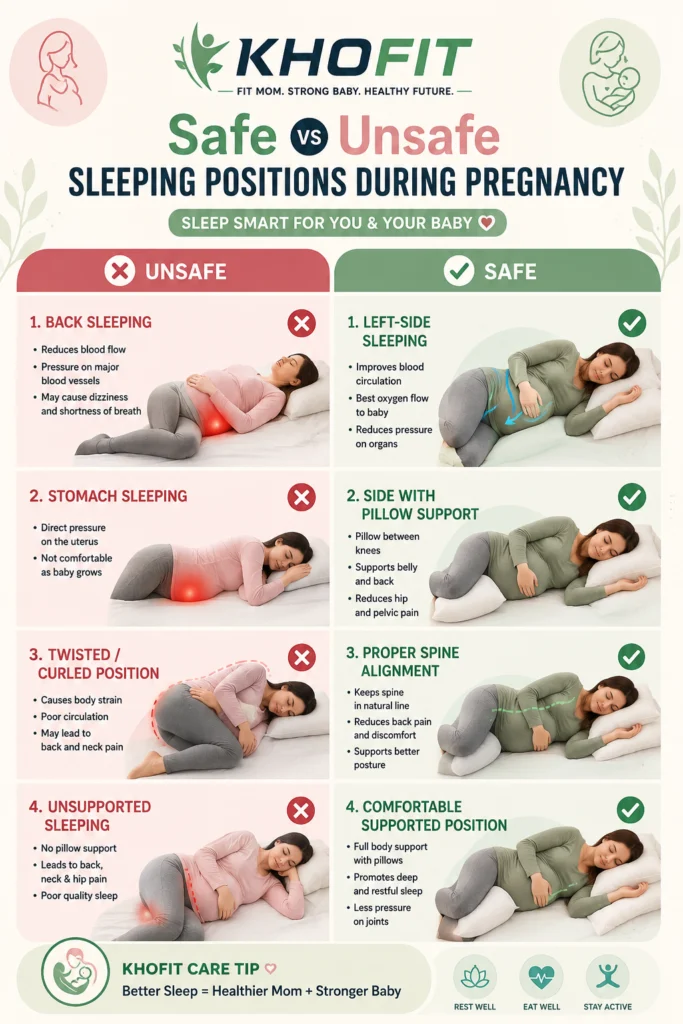
Best Sleeping Positions During Pregnancy
Left Side Sleeping (Best Position)
This is the most recommended position by doctors.
Benefits:
- Improves blood flow to the baby
- Reduces pressure on liver
- Helps kidney function and reduces swelling
Try bending your knees slightly and placing a pillow between them for added comfort.
Right Side Sleeping (Alternative Option)
Sleeping on the right side is also safe if the left side feels uncomfortable.
Benefits:
- Provides decent circulation
- Reduces pressure compared to back sleeping
However, the left side remains the preferred choice whenever possible.
Sleeping Positions to Avoid
Sleeping on Your Back
After the second trimester, this position should be avoided.
Risks:
- Compresses major blood vessels
- Reduces blood flow to the baby
- Causes back pain and breathing issues
Sleeping on Your Stomach
As your pregnancy progresses, this becomes naturally uncomfortable and impractical.
Tips for Better Sleep During Pregnancy
Getting quality sleep can be challenging, but these simple tips can help:
- Use a pregnancy pillow for support
- Place a pillow between knees and under the belly
- Maintain a consistent sleep schedule
- Avoid heavy meals before bedtime
- Stay hydrated, but limit fluids before sleep
- Practice relaxation techniques like deep breathing
Common Sleep Problems During Pregnancy
Many women experience sleep disturbances due to:
- Frequent urination
- Leg cramps
- Heartburn
- Anxiety or stress
Adjusting your sleep position and improving bedtime habits can significantly reduce these issues.
Sleeping position plays a crucial role in ensuring a safe and comfortable pregnancy. While early stages allow flexibility, side sleeping especially on the left becomes essential as your pregnancy progresses.
By adopting the right posture and using proper support, you can improve sleep quality, reduce discomfort, and support your baby’s healthy development.