
Health Benefits of At-Home Cardio
Cardio training improves both physical and mental health. It helps your body function better and keeps your mind active.

Physical Health Benefits
Cardio improves heart health by strengthening the heart muscles. It helps reduce blood pressure and improves blood circulation. Regular workouts support weight management and fat loss. It also improves sleep quality and overall body recovery.
Mental Well-being
Cardio releases endorphins which improve your mood. It helps reduce stress and anxiety levels. Regular movement increases daily energy and keeps your mind fresh. It also builds long-term mental strength and discipline.
Training Methods & Styles
Different training styles help you achieve different goals. Choose based on your fitness level and objective.
HIIT (High-Intensity Interval Training)
HIIT uses short bursts of high effort followed by rest. It saves time and burns more calories. A common format is 20 seconds work and 10 seconds rest. It is effective for fat loss and stamina.
Circuit Training
Circuit training includes multiple exercises done one after another. There is very little rest between movements. It improves endurance and full-body conditioning.
Low Impact Cardio
Low impact workouts are easy on joints. They are best for beginners and older adults. These exercises reduce injury risk while still improving fitness.
Steady-State Cardio
This method uses moderate intensity for a longer time. It helps improve endurance and heart health. It is simple and sustainable for daily routines.
Exercises by Skill Level
Choose exercises based on your current level. Progress step by step.
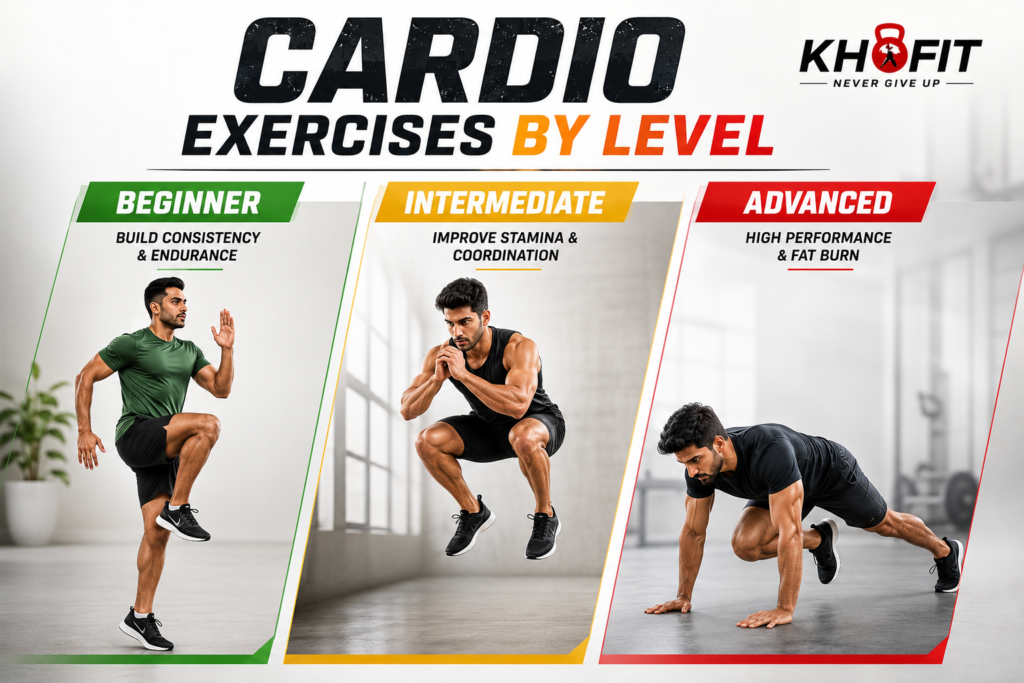
Beginner Level
The goal is to build consistency and basic endurance. Start slow and focus on form.
High Knees at a slow pace help improve coordination. Butt Kicks activate your legs. Marching in Place is simple and effective. Crab Walk improves mobility. Jumping Jacks increase heart rate. Arm Circles loosen the upper body. Toe Taps improve rhythm and balance.
Intermediate Level
The goal is to improve stamina and coordination. Increase intensity gradually.
Squat Jumps build leg power. Lunge Jumps improve balance and strength. Lateral Shuffle increases agility. Plank Jacks engage the core. Skaters improve side movement. Touchdown Squats increase control and flexibility.
Advanced Level
The goal is high performance and maximum fat burn. These exercises demand full effort.
Burpees are full-body intense movements. Mountain Climbers improve speed and core strength. Inchworm Crawl builds mobility and strength. Screamer Lunges improve explosive power. Bear Crawl builds endurance. Plank Ski Hops increase agility. Tuck Jumps improve explosive strength.
Cardio Exercises by Level
| Level | Goal | Exercises | Intensity Tip |
| Beginner | Build consistency & endurance | High Knees (slow), Butt Kicks, Marching in Place, Jumping Jacks, Toe Taps, Arm Circles, Crab Walk | Keep pace slow, focus on form (RPE 4–5) |
| Intermediate | Improve stamina & coordination | Squat Jumps, Lunge Jumps, Lateral Shuffle, Plank Jacks, Skaters, Touchdown Squats | Moderate pace, controlled movement (RPE 6–7) |
| Advanced | High performance & fat burn | Burpees, Mountain Climbers, Inchworm Crawl, Screamer Lunges, Bear Crawl, Plank Ski Hops, Tuck Jumps | High intensity, push effort (RPE 8–9) |
Intensity Measurement
Training should be controlled and measurable. Do not just train hard, train smart.
RPE (Rate of Perceived Exertion)
Use a scale from 1 to 10. Aim for level 6 to 8 for effective cardio. This helps you control effort.
Talk Test
If you can talk comfortably, it is moderate intensity. If you cannot speak full sentences, it is high intensity. Use this to adjust your workout.
Target Heart Rate Zones
Training in different heart rate zones gives different results. Fat burn and cardio zones are most useful for general fitness.
Steps per Minute
Tracking steps helps maintain pace. It also improves consistency during workouts.
Weekly Activity Goals
You should aim for 150 to 300 minutes of moderate cardio per week. You can also do 75 minutes of high-intensity workouts. A simple plan is 20 to 30 minutes daily. Consistency is more important than intensity.
Guidelines & Safety
Follow proper guidelines to avoid injury and improve performance.
Best Practices
Start with a 5 to 10 minute warm-up. End with a 5 to 10 minute cool-down. Drink enough water during workouts. Wear proper footwear for support. Keep your workout space safe and clear.
Safety Considerations
Consult a doctor if you have medical conditions. Focus on correct form to prevent injury. Increase intensity slowly over time. Listen to your body and take rest when needed.
FAQs
You can lose weight with home cardio if you stay consistent and manage your diet. Cardio can be done 4 to 6 days per week depending on your fitness level. HIIT is effective but beginners should start slowly. The best time for cardio is when you can stay consistent. Rest days are important for recovery and muscle repair.
CTA
Start your fitness journey today with simple home workouts. Stay consistent and train with purpose. Follow KHOFIT for structured guidance. Build stamina. Build discipline. Never give up.